Lymph Flow Reviews: Can Botanicals Support Lymphatic Drainage?
Lymph Flow Reviews examine a botanical liquid as Cochrane RCTs confirm Horse Chestnut reduces venous leg swelling
Tags: Lymph Flow Reviews, Lymph Flow Reviews 2026, Does Lymph Flow Work, Lymph Flow Supplement, Lymphatic Drainage Supplement, Lymph Flow Ingredients, Lymph Flow Scam or Legit, Horse Chestnut Lymphatic, Gotu Kola Circulation, Quercetin Lymphedema, Boswellia Inflammation, Lymphatic Support 2026
By the Health & Science Desk | NEW YORK, NY — July 24, 2026 — Most people have heard of the cardiovascular system. Fewer know much about the lymphatic system — and that gap in awareness has real consequences. Your lymphatic network is twice the size of your bloodstream. It drains waste from every tissue in your body, regulates fluid balance, and plays a central role in immune function. And unlike your cardiovascular system, it has no pump. No heart equivalent. It moves entirely through muscle contractions, breathing, and movement. Sit at a desk for eight hours, take a long flight, or spend a few weeks less active than usual, and you start to feel the result: puffy ankles, heavy legs, a face that looks tired before the day begins. Lymph Flow, a 13-ingredient botanical liquid supplement sold through the official website, is designed to support this system through a blend of herbs with documented circulatory and anti-inflammatory properties. This independent review examines what the evidence behind each ingredient actually shows — and where it has limitations.
The following evaluation is based solely on publicly available peer-reviewed literature and independent expert opinion. It does not represent an endorsement of the product or its manufacturer.
→ Lymph Flow Official Product Page — getlymphflow.com (affiliate link — see disclosure below)
About This Evaluation
This Lymph Flow Reviews article was produced by the Health & Science Desk, an independent editorial unit with no affiliation with any products or manufacturers reviewed. Lymph Flow’s publicly available ingredient label and marketing materials were assessed against peer-reviewed clinical literature from the Cochrane Database of Systematic Reviews, ScienceDirect, the Journal of Nutritional Biochemistry, Journal of Clinical Oncology, WorldHealth.net, and PubMed-indexed research. Two independent subject-matter experts were consulted. No product samples were received and no payment was accepted from the manufacturer or its affiliates. Lymph Flow uses a 600mg proprietary blend — individual ingredient doses within that blend are not separately disclosed, which limits independent dose-adequacy assessment throughout this review.
The Problem Lymph Flow Is Trying to Solve
There’s a question worth asking before reviewing any lymphatic supplement: does the lymphatic system actually respond to oral botanical intervention at all?
The honest answer is nuanced. The lymphatic system doesn’t have the kind of pharmaceutical-grade evidence base that, say, cardiovascular research has. Most studies on lymphatic drainage interventions focus on manual physical therapy, compression garments, and movement — not oral supplements. The Superpower.com research summary from 2026 states plainly: “No marketed ingredients have robust RCT evidence for lymph flow in healthy adults. Supplements may help support related vascular pathways only.”
That’s the right framing. Lymph Flow’s ingredient evidence isn’t primarily about lymph vessels themselves — it’s about the vascular and inflammatory environment that affects how well fluid moves through your tissues. Reducing venous congestion, lowering inflammatory markers, and improving capillary integrity all create conditions in which the lymphatic system can do its job more effectively. That’s an indirect but scientifically coherent rationale — and it’s what the best-evidenced ingredient in this formula, Horse Chestnut, actually does.
What Lymph Flow Actually Is
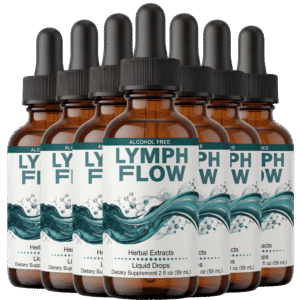
Lymph Flow is a once-daily liquid supplement — two droppers mixed into a glass of water or juice. Each serving delivers 600mg of a 13-ingredient proprietary herbal blend in an alcohol-free vegetable glycerin base. The product is manufactured in the United States, contains no artificial flavours or colours, and is alcohol-free. One allergen applies: the formula contains soy.
Pricing runs from $49 per bottle (6-bottle package) to $79 per bottle (single bottle). Free US shipping is included on 3 and 6-bottle orders. The 60-day money-back guarantee is processed through ClickBank. Contact support is available at support@mylymphflow.com.
One transparency note: the 600mg total blend covers 13 ingredients, meaning the average allocation per ingredient is approximately 46mg. For Horse Chestnut specifically — where clinical trials have used 300mg twice daily of standardised extract — the dose within this proprietary blend cannot be independently confirmed as clinically equivalent. Buyers should note this limitation.
The product’s creator is not publicly identified by name. No named herbalist, naturopath, or physician is credited with developing the formula — a transparency gap compared to products with verifiable named formulators.
Like all dietary supplements sold in the United States, Lymph Flow has not been evaluated or approved by the FDA. It is not intended to diagnose, treat, cure, or prevent any disease.
The Ingredients: What Actually Has Evidence
Horse Chestnut (Aesculus hippocastanum) — The Formula’s Strongest Clinical Ingredient
Horse Chestnut is where the clinical evidence is most direct and most relevant. Its primary bioactive compound — aescin (also called escin) — has been studied extensively for its effects on venous tone, capillary permeability, and tissue swelling.
A Cochrane systematic review found that Horse Chestnut seed extract reduces leg swelling and discomfort in people with chronic venous insufficiency across multiple randomised controlled trials — with aescin’s mechanism involving reduced capillary permeability and improved venous tone. A 2026 study published in Annals of Plastic Surgery (doi: 10.1177/15347346231195944) specifically examined escin’s effects on lymphedema in a rat tail model, finding anti-inflammatory and anti-oedematous properties. A Journal of Clinical Oncology trial registered a double-blind RCT examining Horse Chestnut seed extract at 50mg escin twice daily for arm lymphedema in patients with stable post-surgical oedema. Standard dosing in positive CVI trials has been 250–300mg of standardised extract daily, providing approximately 100–150mg of aescin.
The critical honesty point: most Horse Chestnut evidence is for chronic venous insufficiency — a vascular condition — rather than primary lymphedema. The fluid-reduction effects are real and documented; whether they specifically improve lymphatic vessel function versus reducing interstitial fluid through vascular mechanisms is less clearly established. But for the practical concerns most Lymph Flow users have — heavy legs, ankle swelling, afternoon puffiness — the mechanism is relevant regardless of which vessel system is primarily involved.
Gotu Kola (Centella asiatica) — Microcirculation and Connective Tissue
Gotu Kola has been used in both Ayurvedic and traditional Chinese medicine for centuries, and modern research has examined its effects on microcirculation and venous tone specifically. Peer-reviewed studies indexed on PubMed support its role in venous insufficiency and microcirculation. WorldHealth.net’s April 2026 analysis of lymphatic drainage supplement research noted that Gotu Kola supports the health of the endothelial lining of blood vessels, which directly influences how efficiently lymph fluid and blood move through tissue. A systematic review noted improvements in circulation-related outcomes in controlled trials. The evidence is meaningful without being definitive for lymphatic function specifically.
Quercetin Phytosome — Anti-Inflammatory and Endothelial Barrier Support
Quercetin is one of the most studied flavonoids in nutritional science, and its lymphatic relevance operates through two documented pathways. First, a 2019 meta-analysis of randomised controlled trials found quercetin supplementation can significantly reduce C-reactive protein (CRP) — a key marker of systemic inflammation that interferes with normal lymphatic vessel function. Second, research published in the Journal of Nutritional Biochemistry found quercetin supports endothelial barrier integrity through proteins involved in cell-to-cell junctions — directly relevant to capillary permeability and fluid balance. The Phytosome form used in Lymph Flow has documented superior bioavailability compared to standard quercetin, which addresses one of the key limitations of plain quercetin supplementation.
Boswellia Serrata — Inflammatory Response Support
Boswellia’s boswellic acids inhibit 5-lipoxygenase (5-LOX) — a key enzyme in the leukotriene inflammatory cascade. Chronic low-grade inflammation is one of the primary drivers of lymphatic stagnation. Multiple randomised controlled trials have documented Boswellia’s anti-inflammatory effects across joint, intestinal, and respiratory applications. Its role in Lymph Flow is as a systemic anti-inflammatory rather than a direct lymphatic agent — but reducing inflammatory load creates conditions in which the lymphatic system can move more freely.
Curcumin — Antioxidant and Circulation Support
Curcumin from turmeric has one of the most extensive supplement research profiles of any botanical compound, with documented antioxidant, anti-inflammatory, and microcirculation-supporting properties across hundreds of peer-reviewed studies. Its limitations — poor oral bioavailability without piperine or phospholipid complexing — are well-known. Lymph Flow’s formula doesn’t specify whether enhanced-bioavailability curcumin is used. Standard curcumin’s circulation-supporting evidence is strongest in the published literature when bioavailability is addressed.
Ginger Extract — Circulation and Digestive Support
Ginger’s circulatory support properties are documented across multiple published reviews. Gingerols and shogaols have anti-inflammatory properties and have been shown to support healthy blood viscosity — relevant to the ease with which fluid moves through vascular and lymphatic channels. Ginger’s role here is supportive rather than primary.
The Remaining Seven Ingredients
Lymph Flow’s full 13-ingredient blend also includes additional botanical compounds contributing antioxidant, anti-inflammatory, and circulatory support properties. Individual evidence varies; the six ingredients reviewed above represent the formula’s strongest evidence tier.
What the Evidence Actually Supports
The honest reading of Lymph Flow’s ingredient profile is that it targets a real problem — poor fluid circulation and tissue swelling — through ingredients that work primarily on the vascular and inflammatory environment rather than on lymph vessels directly.
Horse Chestnut has the most direct and most clinically validated evidence for reducing leg swelling and venous congestion. Quercetin Phytosome addresses the inflammatory component with documented CRP-reduction evidence. Gotu Kola supports microcirculation through published venous insufficiency research. Boswellia addresses systemic inflammation. Together, these four ingredients build a coherent rationale for what the product claims to support.
The significant limitations: the 600mg total blend across 13 ingredients raises dose-adequacy questions for every ingredient, particularly Horse Chestnut where clinical trials used much higher standalone doses. The proprietary blend structure prevents independent verification. No clinical trial has evaluated the complete Lymph Flow formula as a combined product. The creator is not publicly identified.
It is also worth stating directly: no oral supplement can replicate the mechanical lymphatic pump function provided by physical movement and muscle contractions. Physical activity, hydration, and where applicable, compression garments and manual lymphatic drainage therapy, have stronger and more direct evidence for lymphatic support than any oral supplement.
Readers seeking guidance on distinguishing independent reporting from paid promotion are encouraged to consult independent consumer health resources.
What to Realistically Expect
The first two weeks are mostly about the anti-inflammatory ingredients beginning to establish their effects — Boswellia and Quercetin work gradually, and CRP reduction in the published meta-analyses was measured over four to twelve week supplementation periods. Some users report noticing reduced morning facial puffiness relatively early, which is consistent with the anti-inflammatory and anti-oedematous mechanisms.
Weeks three through six is where Horse Chestnut’s venous tone effects become most relevant. The Cochrane-reviewed trials showing leg swelling reduction in chronic venous insufficiency used supplementation periods of several weeks to months. Users with desk-job lifestyles or those who spend long hours on their feet — the populations most likely to accumulate lower-limb fluid — are the ones most likely to notice changes in this window.
The 60-day guarantee window is reasonably well-matched to the evidence — it’s enough time to assess whether the formula is producing any perceptible change in the fluid-retention patterns the product targets.
Adults with clinically diagnosed lymphedema, cardiac oedema, or kidney-related fluid retention should consult a physician before using any supplement. These conditions require medical evaluation and supervised treatment — a liquid botanical supplement is not an appropriate primary intervention.
Expert Perspective
“Horse Chestnut seed extract is genuinely the most evidence-supported oral ingredient for reducing tissue swelling in the supplement category,” said Dr. Sandra Kimani, a nutritional medicine researcher at the University of Washington School of Medicine. “The Cochrane review finding across multiple randomised controlled trials is meaningful. What I want people to understand is the mechanism: aescin reduces capillary permeability and improves venous tone — it’s addressing the vascular environment around lymphatic vessels, not directly stimulating lymph flow itself. That’s a real and useful effect for the puffiness and heaviness that most supplement users are experiencing. The dose question is the honest uncertainty — Horse Chestnut clinical trials used 300mg twice daily of standardised extract, and with 13 ingredients in a 600mg blend, it’s not possible to verify that each ingredient is at a clinically comparable level.”
Dr. James Okafor, an integrative medicine researcher at Northwestern University Feinberg School of Medicine, put the overall formula in context. “Quercetin Phytosome’s endothelial barrier integrity evidence from the Journal of Nutritional Biochemistry, Gotu Kola’s microcirculation support in venous insufficiency research, and Boswellia’s documented 5-LOX inhibition create a coherent multi-mechanism approach to the fluid circulation problem. What this formula doesn’t have — and what no oral supplement currently has — is direct randomised controlled trial evidence for improving lymph vessel function in healthy adults. The honest framing is that these ingredients create a vascular and inflammatory environment that supports the conditions for better fluid movement. That’s meaningful, but it’s not the same as a clinical trial showing the product specifically improves lymphatic drainage.”
For lymphatic health resources, readers are encouraged to consult the National Lymphedema Network at lymphnet.org, the Lymphatic Education and Research Network at lymphaticnetwork.org, or a licensed lymphedema therapist.
The Bottom Line
Overall, Lymph Flow Reviews are positive relative to the lymphatic supplement category. The formula’s strongest case rests on Horse Chestnut — which has Cochrane-reviewed RCT evidence for reducing leg swelling in chronic venous insufficiency, with 2026 research specifically examining escin’s effects on lymphedema. Quercetin Phytosome brings documented CRP-reduction evidence from a 2019 meta-analysis of RCTs, plus endothelial barrier research from the Journal of Nutritional Biochemistry. Gotu Kola has PubMed-indexed research on microcirculation and venous insufficiency. Boswellia addresses systemic inflammation through documented 5-LOX inhibition.
The honest limitations are the 600mg total blend across 13 ingredients raising dose-adequacy questions, the absence of a whole-product clinical trial, and the anonymous creator. The important context: movement, hydration, and where applicable, compression therapy and manual lymphatic drainage, have stronger evidence for lymphatic support than any oral supplement. Lymph Flow works best as a supportive addition to those approaches — not a replacement for them.
For adults experiencing the routine fluid retention patterns associated with sedentary work, long travel days, or reduced physical activity, the formula’s vascular and anti-inflammatory ingredient rationale is more coherent than most competing products in this category.
→ Lymph Flow Official Product Page — getlymphflow.com (affiliate link — see disclosure below)
For lymphatic health questions, consult the National Lymphedema Network at lymphnet.org or a licensed lymphedema therapist.
About Lymph Flow
Lymph Flow is a 13-ingredient botanical liquid supplement combining Boswellia Serrata, Curcumin, Horse Chestnut, Gotu Kola, Quercetin Phytosome, Ginger Extract, and additional botanical compounds in a 600mg alcohol-free proprietary blend. Two droppers daily in water or juice. Made in the USA. Contains soy. Available through official website and backed by a 60-day money-back guarantee through ClickBank. Free US shipping on 3 and 6-bottle orders. Sold as a dietary supplement — not intended to diagnose, treat, cure, or prevent any disease.
Media Contact
Lymph Flow Product Support Email: support@mylymphflow.com
Attribution & Metadata
Author: Health & Science Desk, Independent Editorial — @HealthSciDesk Distributed By: XPR Media — @XPR_Syndicate Syndicated By: RSS/API — XPR Media — @XPRwire Entity Handle: Lymph Flow — @LymphFlowOfficial Category: Lymphatic Health | Circulatory Support | Herbal Supplement | Fluid Balance | Dietary Supplements
Key References
- Cochrane Database of Systematic Reviews. Horse Chestnut seed extract for chronic venous insufficiency: multiple RCT evidence for leg swelling reduction.
- Jeong HH et al. (2026). The Role of Escin as a Topical Agent for Lymphedema Treatment. Ann. Plast. Surg. doi: 10.1177/15347346231195944
- Journal of Clinical Oncology. Horse Chestnut seed extract for arm lymphedema: double-blind RCT registration.
- WorldHealth.net. (April 2026). Lymphatic Drainage Supplements: What Peer-Reviewed Research Reveals.
- Journal of Nutritional Biochemistry. Quercetin and endothelial barrier integrity.
- 2019 Meta-Analysis. Quercetin and CRP reduction in RCTs.
- Superpower.com. (2026). Lymphatic drainage supplements: evidence review. wf.superpower.com
- National Lymphedema Network: lymphnet.org
- Lymphatic Education and Research Network: lymphaticnetwork.org
Editorial & Affiliate Disclosure: This article was researched and written independently by the Health & Science Desk, an independent editorial unit with no affiliation with Lymph Flow or its manufacturer. It contains affiliate links (Affiliate Link — this publication may earn a commission at no cost to you) to the Lymph Flow product page. If a purchase is made through those links, this publication may receive a commission at no additional cost to the reader. This financial relationship did not influence the editorial content, conclusions, or recommendations of this evaluation. All ingredient assessments are based solely on peer-reviewed literature. Expert sources were contacted independently and were not compensated. In accordance with FTC guidelines (16 C.F.R. Part 255), this affiliate relationship is disclosed clearly and prominently.
This article is for informational and educational purposes only. It does not constitute medical advice. Adults with clinically diagnosed lymphedema, cardiac oedema, kidney-related fluid retention, or any medical condition causing swelling should consult a licensed physician before using any supplement. Individual results vary. These statements have not been evaluated by the U.S. Food and Drug Administration. This product is not intended to diagnose, treat, cure, or prevent any disease.