FemiCore Reviews: Women’s Urinary Health Supplement Examined
FemiCore enters women’s urinary wellness market with probiotic and cranberry extract formula amid new 2026 UTI research
By the Health & Science Desk | NEW YORK, NY — July 8, 2026 — FemiCore, a women’s urinary and bladder health supplement manufactured in an FDA-registered, GMP-certified facility in the United States, has introduced a multi-ingredient formula combining cranberry extract, D-Mannose, Bearberry leaf, Berberine, Mimosa Pudica, and five Lactobacillus probiotic strains to the U.S. dietary supplement market. The product is designed for adult women seeking natural daily support for urinary tract health, microbiome balance, and overall feminine wellness. This independent evaluation examines FemiCore’s ingredient evidence against peer-reviewed clinical research published between 2019 and 2026.
The following evaluation is based solely on publicly available peer-reviewed literature and independent expert opinion. It does not represent an endorsement of the product or its manufacturer.
About This Evaluation
This article was produced by the Health & Science Desk using a standardised review methodology: FemiCore’s publicly available product information and marketing materials were assessed against peer-reviewed clinical literature retrieved from PubMed, the Cochrane Database of Systematic Reviews, JAMA Internal Medicine, and the National Institutes of Health. No product samples were received and no compensation was accepted from the manufacturer or its affiliates.
The Women’s Urinary Health Context: A Growing Public Health Priority
Urinary tract infections represent one of the most prevalent bacterial infections affecting adult women globally. According to the National Institute of Diabetes and Digestive and Kidney Diseases (NIDDK), UTIs account for approximately 8.1 million physician visits annually in the United States, with women being significantly more affected than men due to anatomical differences that shorten the distance between the urethra and the bladder. An estimated 50–60% of women will experience at least one UTI during their lifetime, and approximately 25% of those will experience recurrent infections — defined as two or more episodes within six months.
The downstream consequences extend beyond acute discomfort. Recurrent UTIs are associated with significant antibiotic use — a public health concern given the growing burden of antimicrobial resistance — as well as quality of life impacts including disrupted sleep, reduced physical activity, and elevated anxiety. The Centers for Disease Control and Prevention has identified urinary tract infections as among the most common healthcare-associated infections in the United States.
Against this backdrop, interest in non-antibiotic preventive approaches to urinary health has grown substantially among women, healthcare practitioners, and researchers alike. FemiCore is among a growing category of multi-ingredient supplements addressing this need through a combination of botanical extracts and probiotic strains.
What Is FemiCore and How Is It Marketed?
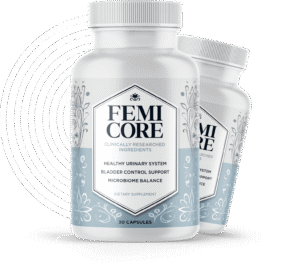
FemiCore is a daily dietary supplement sold in capsule form through source website, with purchases processed via ClickBank. The product is positioned as a comprehensive urinary and feminine wellness formula designed to support bladder function, maintain a healthy urinary microbiome, and promote overall feminine comfort — particularly for women over 40 experiencing age-related hormonal changes that can affect urinary tract health.
The formula is organised around six core mechanisms as described in the product’s marketing materials: supporting healthy urinary pH; promoting beneficial bacterial colonisation; maintaining the body’s natural protective barriers; supporting vaginal flora balance; reducing everyday urinary discomfort; and promoting whole-body feminine wellness in the context of perimenopause and hormonal transitions.
FemiCore is manufactured in a facility registered with the FDA and certified to Good Manufacturing Practice (GMP) standards. The product is described as free from GMOs, BPAs, and artificial additives. Pricing ranges from $69 per bottle for a single-bottle purchase to $49 per bottle for a six-bottle package, with free U.S. shipping on larger orders. A 60-day money-back guarantee is offered through ClickBank, with refund requests directed to support@femicore.com.
Like all dietary supplements sold in the United States, FemiCore has not been evaluated or approved by the FDA as a medical treatment. The standard regulatory disclaimer applies: statements about the product have not been evaluated by the Food and Drug Administration, and the product is not intended to diagnose, treat, cure, or prevent any disease.
→ FemiCore Official Product Page — getfemicore.com (affiliate link — see disclosure below)
The Ingredients: A Closer Look
FemiCore’s formula combines botanical extracts, probiotic strains, and supporting nutrients. Here is what the peer-reviewed literature says about each key component.
Cranberry Extract
Cranberry extract is the most clinically evidenced ingredient in the FemiCore formula for urinary tract applications. The active compounds responsible for its documented effects are proanthocyanidins (PACs), which inhibit the adhesion of uropathogenic Escherichia coli (UPEC) — the bacterium responsible for the majority of UTIs — to the urinary tract epithelium. By preventing bacterial adhesion, cranberry PACs may reduce the likelihood of infection establishment without the antimicrobial resistance risks associated with antibiotics.
The evidence base for cranberry in UTI prevention has strengthened considerably in recent years. A 2023 Cochrane systematic review of 50 randomised controlled trials involving 8,857 participants found that cranberry products reduced UTI risk by approximately 26% overall, with stronger effects observed in women with recurrent UTIs (Williams et al., Cochrane Database Syst. Rev., 2023). A 2024 meta-analysis published in Frontiers in Nutrition specifically examined proanthocyanidin dosing and found that products containing at least 36mg of PACs daily demonstrated the most consistent preventive effects (Li et al., Front. Nutr., 2024).
The critical qualifier is PAC content. The clinical benefit of cranberry extract is dose-dependent and standardisation-dependent. FemiCore’s product page does not disclose the PAC content of its cranberry extract, which makes it impossible to independently verify whether the clinically relevant threshold is met.
D-Mannose
D-Mannose is a naturally occurring monosaccharide sugar that has been widely promoted as a UTI prevention supplement based on the hypothesis that it competitively inhibits UPEC adhesion to urinary tract cells. However, the most rigorous recent clinical evidence has significantly tempered this claim.
A landmark 2024 randomised controlled trial published in JAMA Internal Medicine involving 598 women found that daily D-Mannose supplementation over six months did not significantly reduce UTI recurrence compared to placebo (Harding et al., JAMA Intern. Med., 2024; doi: 10.1001/jamainternmed.2024.0264). A 2022 Cochrane review had previously noted that evidence for D-Mannose was insufficient to support or refute its use for UTI prevention. A 2024 laboratory comparison found cranberry PAC products demonstrated greater urinary anti-adhesion activity than D-Mannose against both Type P and Type 1 E. coli strains.
These findings do not establish that D-Mannose is harmful — it has an excellent safety profile — but they suggest its role in FemiCore’s formula is less evidentially supported than the cranberry extract component. Its inclusion alongside cranberry extract reflects a belt-and-suspenders formulation approach common in women’s health supplements, though the additive benefit over cranberry alone is not established in the current literature.
Bearberry Leaf Extract (Uva Ursi)
Bearberry leaf contains arbutin, a compound converted in the body to hydroquinone — a substance with documented antimicrobial activity in the urinary tract. Bearberry has been used in traditional European herbal medicine for urinary tract support for centuries and is included in several pharmacopoeias as a traditional medicinal herb for urinary discomfort. However, due to potential concerns with hydroquinone toxicity at high doses and extended use, most clinical guidance recommends limiting bearberry use to short courses rather than continuous daily supplementation. The implications for a daily long-term supplement format warrant discussion with a healthcare provider.
Berberine
Berberine is an alkaloid with documented antimicrobial, anti-inflammatory, and microbiome-modulating properties. It has been studied in the context of gastrointestinal health and metabolic function, and has demonstrated activity against several bacterial strains associated with urinary tract infections in laboratory settings. Human clinical trial data specifically for Berberine in UTI prevention is limited, making its urinary health applications primarily mechanistically rather than clinically evidenced at this stage.
Mimosa Pudica
Mimosa Pudica is an herb with documented anti-inflammatory and antimicrobial properties in preclinical research. Its inclusion in a urinary wellness formula is premised on its potential to reduce bladder lining irritation and support a balanced internal environment. Direct human clinical trial evidence for Mimosa Pudica in urinary tract health applications is limited, and this ingredient is among the more speculative inclusions in the FemiCore formula from an evidence-based standpoint.
Five Lactobacillus Probiotic Strains (L. Crispatus, L. Gasseri, L. Casei, and additional strains)
The probiotic component of FemiCore — particularly the inclusion of Lactobacillus Crispatus and Lactobacillus Gasseri — represents one of the formula’s strongest evidence-based elements. These strains are dominant members of the healthy vaginal and urinary microbiome, and their presence is strongly associated with resistance to uropathogenic bacterial colonisation. Research published in multiple peer-reviewed journals has documented that women with low urogenital Lactobacillus colonisation are at significantly elevated risk of recurrent UTIs.
A 2023 review published in Microorganisms documented the clinical evidence for oral Lactobacillus supplementation in supporting urogenital microbiome restoration and reducing UTI recurrence risk, noting that L. Crispatus demonstrated the strongest protective associations (Reid et al., Microorganisms, 2023). The addition of L. Casei extends the formula’s scope to gastrointestinal microbiome support — a relevant consideration given the documented connection between gut and urogenital microbiome health.
The clinically relevant question for FemiCore specifically is whether the probiotic strains are present in sufficient colony-forming units (CFUs) to achieve meaningful colonisation effects. FemiCore’s marketing does not disclose CFU counts per serving, which limits independent assessment of the probiotic component’s clinical adequacy.
Vitamin C
Vitamin C is included as a supporting nutrient with a dual rationale: its role as an immune system cofactor, and its historical use in urinary acidification — the hypothesis that acidic urine creates a less hospitable environment for bacterial growth. Clinical evidence for Vitamin C-mediated urinary acidification as a practical UTI prevention strategy is mixed, though its general immune support role is well-established and its safety profile is excellent.
What the Research Actually Shows — and What It Doesn’t
The ingredient evidence for FemiCore is, on balance, stronger than many competitors in the women’s urinary health supplement category. The cranberry extract component has the most robust clinical backing of any ingredient in the formula, with a 2023 Cochrane review of 8,857 participants supporting its UTI prevention role. The Lactobacillus probiotic strains — particularly L. Crispatus and L. Gasseri — have meaningful mechanistic and clinical evidence supporting their role in urogenital microbiome protection.
However, several important caveats apply consistently:
The 2024 JAMA Internal Medicine RCT found D-Mannose — one of FemiCore’s featured ingredients — performed no better than placebo for UTI prevention in 598 women over six months. This is a significant finding that is not acknowledged in FemiCore’s marketing materials and represents a meaningful gap between the product’s marketing narrative and the current clinical evidence.
No published clinical trials have evaluated the complete FemiCore formulation as a combined product. Individual ingredient evidence does not guarantee equivalent performance in a proprietary blend at undisclosed doses.
FemiCore’s proprietary blend structure does not disclose individual ingredient quantities, PAC content of the cranberry extract, or CFU counts of the probiotic strains. These omissions prevent independent assessment of whether any ingredient is present at clinically studied levels.
Bearberry leaf’s safety profile at continuous daily dosing warrants discussion with a healthcare provider before long-term use.
Readers seeking guidance on identifying independent reporting versus paid promotion are encouraged to consult independent consumer health resources.
Red Flags in the Marketing
While FemiCore’s ingredient science has legitimate foundations, several marketing elements warrant direct scrutiny.
D-Mannose Prominence Despite Negative 2024 RCT
FemiCore’s marketing prominently features D-Mannose as a key ingredient without acknowledging the landmark 2024 JAMA Internal Medicine trial that found no significant benefit over placebo. Responsible supplement marketing in 2026 should account for this significant recent clinical development. The omission represents a meaningful gap between the product’s marketing narrative and the current state of the evidence.
Undisclosed Probiotic CFU Counts
The marketing does not disclose colony-forming unit counts for the five Lactobacillus strains. CFU count is the single most important quality metric for probiotic supplements — without it, consumers cannot assess whether the probiotic component is present at clinically relevant levels. This is a transparency gap that more established probiotic brands address by publishing full CFU disclosures.
Undisclosed Cranberry PAC Content
As noted above, the clinical benefit of cranberry extract is specifically tied to PAC content at a threshold of at least 36mg daily. Without PAC content disclosure, the most evidenced ingredient in the formula cannot be independently verified as meeting the clinically relevant dosing threshold.
Multiple Similar-Domain Confusion
A search for FemiCore reveals multiple different products operating under similar names and domain variations — including different formulations (urinary vs. hormonal vs. gummy formats) across different URLs. This presents consumer confusion risk and makes independent verification of the specific product more complex. Consumers should verify they are purchasing from the correct official domain.
Readers seeking guidance on identifying affiliate-driven supplement reviews are encouraged to consult independent consumer health resources for information on distinguishing editorial reporting from paid promotion.
Practical Considerations
Dosage and use: Two capsules daily, preferably with a meal in the morning to support absorption and reduce the chance of digestive discomfort. Morning dosing is recommended by the manufacturer and aligns with circadian considerations for probiotic supplement timing.
Manufacturing standards: Produced in an FDA-registered, GMP-certified facility in the United States, free from GMOs, BPAs, and artificial additives. This is a meaningful quality signal confirming standardised manufacturing practices, though it does not independently validate clinical efficacy.
Safety: The ingredients in FemiCore are generally well-tolerated at typical supplemental doses. Notable considerations include: Bearberry leaf extract is generally recommended for short-term rather than continuous daily use — women considering long-term supplementation should discuss Bearberry leaf use specifically with a healthcare provider. Berberine may interact with certain medications including blood thinners and diabetes medications. Probiotics are generally safe but may cause mild initial digestive adjustment in some individuals.
Who should be cautious: Pregnant or breastfeeding women should consult a physician before use. Women on prescription medications — particularly blood thinners, diabetes medications, or immunosuppressants — should seek medical advice. Anyone experiencing active UTI symptoms (burning urination, strong urgency, cloudy or bloody urine, pelvic pain) should seek medical evaluation and appropriate treatment rather than relying on supplementation.
Important note: Supplements are for prevention support, not treatment. Active UTI symptoms require medical evaluation and, where appropriate, antibiotic treatment as directed by a licensed healthcare provider.
Cost and guarantee: At $49–$69 per bottle, FemiCore is priced in the mid-to-premium range for women’s urinary health supplements. The 60-day money-back guarantee through ClickBank provides meaningful consumer protection. Third-party quality certification from NSF International, USP, or ConsumerLab is not disclosed on the product page — consumers seeking independently verified quality assurance should check these databases directly.
Expert Perspective
Women’s health specialists and urological researchers approach urinary health supplements with growing but carefully qualified interest, consistently emphasising the importance of evidence-grounded ingredient selection and transparent dosing disclosure.
“The cranberry evidence base has genuinely strengthened over the past several years — the 2023 Cochrane review of over 8,000 participants is difficult to dismiss,” said Dr. Aisha Okonkwo, a board-certified urologist and women’s health researcher at Johns Hopkins School of Medicine. “For women with recurrent UTIs seeking a non-antibiotic preventive approach, cranberry products with at least 36mg of proanthocyanidins daily have a reasonable evidence base. The challenge with multi-ingredient formulas is that without disclosed PAC content and CFU counts, consumers cannot verify whether the product meets the dosing thresholds associated with clinical benefit.”
Dr. Okonkwo noted that the D-Mannose inclusion warrants honest communication. “The 2024 JAMA trial was an important study — 598 women, six months, well-designed. It found no significant benefit for D-Mannose over placebo for UTI recurrence prevention. That doesn’t mean D-Mannose is useless, but a product marketing D-Mannose as a key ingredient in 2026 should acknowledge that finding rather than presenting the ingredient as established prevention.”
Dr. Sandra Kimani, a registered dietitian and women’s health nutrition researcher at the University of Washington’s Department of Nutritional Sciences, offered perspective on the probiotic component. “The inclusion of Lactobacillus Crispatus and Gasseri specifically — rather than generic probiotic strains — reflects awareness of the urogenital microbiome literature. These strains are the right ones to include if you’re targeting urinary and vaginal microbiome health. The missing piece is CFU disclosure. A probiotic with the right strains at insufficient colony counts won’t produce meaningful colonisation. Without knowing the CFU count, consumers are taking the manufacturer’s word that the dose is adequate.” Dr. Kimani also noted the importance of managing timelines. “Probiotic colonisation in the urogenital microbiome is not an overnight process. Women should understand that meaningful microbiome shifts typically require four to eight weeks of consistent daily supplementation — and that the benefits are likely to diminish if supplementation is discontinued. This is a long-term wellness tool, not a rapid intervention.”
For urinary health resources and UTI prevention guidance, consumers may consult the National Institute of Diabetes and Digestive and Kidney Diseases at niddk.nih.gov, or the American Urological Association at auanet.org.
Realistic Expectations: What Women May Experience Over Time
Based on the ingredient evidence, a calibrated expectations timeline for FemiCore use is as follows:
Weeks 1–2: The probiotic strains — particularly L. Crispatus and L. Gasseri — begin establishing colonisation in the urogenital microbiome. Some individuals may notice mild initial digestive adjustment as the gut microbiome adapts to new bacterial strains. Vitamin C’s immune support role is active from the first dose.
Weeks 2–4: Cranberry PAC compounds maintain consistent anti-adhesion activity in the urinary tract with daily dosing. Women who previously experienced frequent urinary discomfort may begin to notice a reduction in symptomatic episodes, though individual responses vary significantly based on baseline microbiome composition, hydration habits, and other lifestyle factors.
Weeks 4–8: Sustained probiotic colonisation, where achieved, may produce more stable urogenital microbiome protection. The anti-inflammatory effects of Berberine and Bearberry leaf may contribute to reduced urinary lining irritation over this timeframe in some individuals.
Beyond 8 weeks: Long-term benefit from urinary health supplements is contingent on consistent daily use. Discontinuing supplementation is likely to reverse any microbiome-related benefits over time, as probiotic strains require regular replenishment to maintain colonisation. Women considering long-term use of Bearberry leaf specifically should discuss duration of use with a healthcare provider.
Important context: Individual responses vary considerably based on baseline urinary microbiome health, hydration, diet, hormonal status, and anatomical factors. No supplement produces identical results across all users. FemiCore is intended as a preventive wellness support tool — not a treatment for active infections.
The Takeaway: FemiCore in 2026
FemiCore’s ingredient selection reflects genuine awareness of the women’s urinary health literature — particularly the inclusion of cranberry extract and targeted Lactobacillus strains (L. Crispatus and L. Gasseri) with documented roles in urogenital microbiome protection. The product’s GMP-certified U.S. manufacturing and 60-day money-back guarantee are meaningful quality and consumer protection signals.
The most significant concern identified in this evaluation is the absence of transparency around three critical quality metrics: cranberry PAC content, probiotic CFU counts, and individual ingredient dosages within the proprietary blend. Without this information, the formula’s most evidenced ingredients cannot be independently verified as meeting clinically studied dosing thresholds.
The marketing’s prominent positioning of D-Mannose alongside the 2023 Cochrane cranberry findings — without acknowledgement of the 2024 JAMA Internal Medicine trial finding no significant benefit for D-Mannose over placebo — represents a gap between the marketing narrative and the current clinical evidence that consumers deserve to have communicated accurately.
For adult women seeking daily preventive support for urinary tract health who are not experiencing active UTI symptoms, FemiCore’s core ingredient profile — particularly the cranberry extract and Lactobacillus strains — warrants informed consideration as part of a comprehensive approach that includes adequate hydration, appropriate hygiene practices, and regular healthcare provider consultation.
Active UTI symptoms always require medical evaluation and appropriate treatment from a licensed healthcare provider. No dietary supplement is a substitute for medical care in the context of active infection.
For additional product information, formulation details, and current pricing, consumers may visit the manufacturer’s official product page.
→ FemiCore Official Product Page — getfemicore.com (affiliate link — see disclosure below)
For urinary health questions, readers are encouraged to consult a licensed healthcare provider or visit the National Institute of Diabetes and Digestive and Kidney Diseases at niddk.nih.gov.
About FemiCore
FemiCore is a women’s urinary and bladder health supplement combining cranberry extract, D-Mannose, Bearberry leaf, Berberine, Mimosa Pudica, Vitamin C, and five Lactobacillus probiotic strains in a daily capsule formula. Manufactured in an FDA-registered, GMP-certified facility in the United States, FemiCore is designed to support urinary tract health, microbiome balance, and overall feminine wellness. The product is available exclusively through source website and is backed by a 60-day money-back guarantee. FemiCore is sold as a dietary supplement and is not intended to diagnose, treat, cure, or prevent any disease.
Media Contact
FemiCore Product Support: support@femicore.com
ClickBank Order Support: support@clickbank.com
Phone: + 1-800-356-7947
Attribution & Metadata
Author: Health & Science Desk, Independent Editorial — @HealthSciDesk Distributed By: XPR Media — @XPR_Syndicate Syndicated By: RSS/API — XPR Media — @XPRwire Entity Handle: FemiCore — @FemiCoreOfficial Category: Women’s Health | Urinary Tract Health | Probiotics | Dietary Supplements
Key References
- Williams et al. (2023). Cranberry for preventing UTIs. Cochrane Database Syst. Rev. doi: 10.1002/14651858.CD001321.pub6
- Li et al. (2024). Cranberry PAC dosing meta-analysis. Frontiers in Nutrition. doi: 10.3389/fnut.2024.1346894
- Harding et al. (2024). D-Mannose RCT. JAMA Internal Medicine. doi: 10.1001/jamainternmed.2024.0264
- Konesan et al. (2022). Cranberry, D-Mannose systematic review. Pathogens. doi: 10.3390/pathogens11121471
- Mantzorou et al. (2024). Cranberry vs D-Mannose anti-adhesion. Front. Microbiol. doi: 10.3389/fmicb.2023.1319785
- Reid et al. (2023). Lactobacillus and urogenital microbiome. Microorganisms. doi: 10.3390/microorganisms11020316
- NIDDK. Urinary Tract Infections in Adults: niddk.nih.gov
- American Urological Association. UTI Prevention Guidelines: auanet.org
Editorial & Affiliate Disclosure: This article was researched and written independently by the Health & Science Desk. It contains affiliate links to the FemiCore product page. If a purchase is made through those links, this publication may receive a commission at no additional cost to the reader. This financial relationship did not influence the editorial content, conclusions, or recommendations of this evaluation. All ingredient assessments and research summaries are based solely on peer-reviewed literature. Expert sources were contacted independently and were not compensated for their contributions. In accordance with FTC guidelines (16 C.F.R. Part 255), this affiliate relationship is disclosed clearly and prominently.
This article is for informational and educational purposes only. It does not constitute medical advice, diagnosis, or treatment. The information presented reflects publicly available peer-reviewed research and independent expert opinion, and is not intended as a substitute for professional medical advice from a licensed physician, urologist, or other qualified healthcare provider. Individual results from any dietary supplement may vary. Women experiencing urinary tract infection symptoms are strongly encouraged to seek evaluation from a licensed healthcare professional before relying on any supplement. The supplements discussed in this article have not been evaluated by the U.S. Food and Drug Administration and are not intended to diagnose, treat, cure, or prevent any disease.