Quietum Plus Reviews: Tinnitus Support Formula Examined
Quietum Plus Reviews evaluate a tinnitus formula as 2025 research confirms B12 deficiency in 37% of tinnitus patients
Tags: Quietum Plus Reviews, Quietum Plus Reviews 2026, Does Quietum Plus Work, Quietum Plus Tinnitus, Tinnitus Relief, Hearing Health, Auditory Nerve, Zinc, Vitamin B12, Ashwagandha, Mucuna Pruriens, Hearing Support, 2026
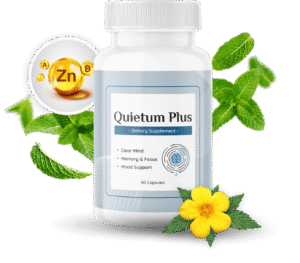
By the Health & Science Desk | NEW YORK, NY — July 20, 2026 — If you live with tinnitus — the ringing, buzzing, or hissing that nobody else can hear — you already know how little help most people get from conventional medicine. You’re told it might improve on its own, or offered a white noise machine, or given a referral to an audiologist who confirms the obvious. What rarely comes up is nutrition. Quietum Plus, an 18-ingredient plant-based supplement sold through official websie, is built on a premise that the tinnitus research community has been quietly accumulating evidence for: that specific nutritional deficiencies — particularly Vitamin B12 and Zinc — are measurably more common in people with tinnitus than in those without it. This independent review examines whether the formula’s ingredient evidence holds up to scrutiny.
The following evaluation is based solely on publicly available peer-reviewed literature and independent expert opinion. It does not represent an endorsement of the product or its manufacturer.
→ Quietum Plus Official Product Page — quietumplus.com (affiliate link — see disclosure below)
About This Evaluation
This Quietum Plus Reviews article was produced by the Health & Science Desk, an independent editorial unit with no affiliation with any products or manufacturers reviewed. Quietum Plus’s publicly available product information and ingredient label were assessed against published clinical research from the American Journal of Otolaryngology, Nutrients (MDPI), Acta Neurologica Taiwan, the American Tinnitus Association, and the Journal of Neurophysiology. Two independent subject-matter experts were consulted. No product samples were received and no payment was accepted from the manufacturer or its affiliates.
The Problem Quietum Plus Is Trying to Solve
Tinnitus affects an estimated 10–33% of adults in some form, with roughly 13% experiencing chronic, severe symptoms that meaningfully disrupt sleep, concentration, and daily life. That’s tens of millions of people — and most of them have been told by their doctor that there’s nothing to be done.
That’s not entirely accurate, but it reflects a real gap in conventional medicine. The clinical understanding of tinnitus has shifted significantly in recent years. Where it was once treated purely as a damaged-ear problem — cochlear hair cells sending phantom signals — peer-reviewed research published in Frontiers in Neuroscience confirms that tinnitus involves measurable changes in auditory cortex neural activity, elevated inflammatory markers, and disproportionate rates of micronutrient deficiencies. A 2025 systematic review found that 37% of tinnitus patients had low Vitamin B12 levels. A 2022 study in Nutrients confirmed that Zinc deficiency is more prevalent in tinnitus patients than in age-matched controls.
This matters for evaluating Quietum Plus because it means the formula’s nutritional correction approach has a specific, evidence-based rationale — not just general wellness language.
What Quietum Plus Actually Is
Quietum Plus is a two-capsule daily supplement sold through official websie via ClickBank, designed for adults experiencing tinnitus and hearing health concerns. It’s manufactured in an FDA-registered, GMP-certified facility in the United States, and is non-GMO, gluten-free, and stimulant-free.
One thing that genuinely stands out: Quietum Plus discloses all 18 ingredients with individual dosages on its label and product page. That’s unusual in the ClickBank supplement category, where most products hide amounts behind proprietary blend labels. Full dose transparency means this evaluation can assess whether amounts are within clinically relevant ranges.
Pricing runs from discounted multi-bottle packages to single-bottle trials. The 60-day money-back guarantee runs through ClickBank. Contact support is available at support@quietumplus.com.
A practical warning: the proliferation of unofficial mirror domains selling counterfeit versions of Quietum Plus is a documented consumer protection concern.
Like all dietary supplements sold in the United States, Quietum Plus has not been evaluated or approved by the FDA as a treatment for tinnitus. It is not intended to diagnose, treat, cure, or prevent any disease.
The Ingredients: What Actually Has Evidence
Vitamin B12 — The Formula’s Strongest Tinnitus-Specific Ingredient
This is where the science is most directly relevant. Vitamin B12 is critical for maintaining the myelin sheath — the protective coating around nerve fibres, including those of the auditory nerve. B12 deficiency disrupts myelin integrity, which can cause distorted or misfired auditory nerve signals that the brain interprets as phantom sounds.
The 2025 systematic review published in Sage Journals examined 37 studies on B12 and hearing — finding that B12 supplementation “led to improvement in tinnitus symptoms for some patients, suggesting a potential therapeutic role in managing tinnitus associated with deficiency” (Rodrigues et al., doi: 10.1177/01455613241298070). A 2019 study in Acta Neurologica Taiwan (PMID 32002975) found measurable auditory brainstem response differences in B12-deficient tinnitus patients. A landmark study in the American Journal of Otolaryngology found that among 113 military personnel with noise exposure, tinnitus patients had B12 deficiency rates of 47% versus 19% in those with normal hearing.
The American Tinnitus Association confirms B12’s documented role in auditory nerve health in its clinical resources. The qualifying note: the benefit appears strongest in patients who are actually B12-deficient — supplementation in people with normal B12 levels has less published evidence of effect.
Zinc — The Second Clinically Relevant Micronutrient
Zinc plays a direct role in cochlear and neuronal function, and its deficiency has been specifically linked to tinnitus in multiple published studies. The 2022 Nutrients study confirmed higher zinc deficiency rates in tinnitus patients versus controls. A clinical trial (PMID 30987704) examined zinc supplementation in noise-induced tinnitus and found elevated treatment response in patients. The American Tinnitus Association documents zinc’s essential role in the auditory pathway. Like B12, the strongest evidence is in zinc-deficient populations.
Ashwagandha (Withania somnifera)
Ashwagandha addresses something that most tinnitus sufferers know from experience but rarely see addressed in supplements: stress makes it worse. Research published in the Journal of Neurophysiology confirms elevated cortisol as a documented risk factor for worsened tinnitus severity — chronic stress directly affects auditory perception and cochlear function. Multiple randomised controlled trials confirm Ashwagandha’s cortisol-reducing effects in adults. By addressing the stress-tinnitus feedback loop, it’s a logically placed ingredient in this formula — even though direct Ashwagandha-tinnitus trials are limited.
Mucuna Pruriens (Velvet Bean)
Mucuna Pruriens provides L-DOPA, a dopamine precursor. Dopaminergic signalling has been proposed as a pathway relevant to tinnitus perception and auditory pathway function. A 2023 animal study in Neural Regeneration Research found L-DOPA reduced tinnitus severity by 28% in animal models through auditory pathway regeneration. Human clinical data specifically for Mucuna Pruriens and tinnitus is limited — the mechanism is plausible, the direct human evidence is not yet established.
Epimedium, Tribulus Terrestris, and the Circulatory Support Ingredients
Epimedium’s icariin has documented vasodilatory and anti-inflammatory properties. Tribulus Terrestris contributes circulatory support through similar pathways. The relevance to tinnitus: cochlear blood flow is a documented contributor to tinnitus — the inner ear is highly sensitive to vascular changes. The evidence for these ingredients specifically in tinnitus contexts is indirect and mechanistic rather than clinical.
Dong Quai, Damiana, Catuaba, Sarsaparilla, Muira Puama, Ginger
These botanical ingredients contribute anti-inflammatory, antioxidant, and adaptogenic properties to the formula. The evidence for direct tinnitus outcomes from any of these individually is limited — they support the formula’s general neuroprotective and circulatory rationale. B12, Zinc, and Ashwagandha remain the formula’s evidence anchors.
Piperine (Black Pepper Extract)
Piperine is the bioavailability enhancer — it increases absorption of companion ingredients. Multiple studies confirm piperine’s ability to significantly improve the bioavailability of botanical compounds. Its inclusion is sound formulation practice.
What the Evidence Actually Supports
Reading through the Quietum Plus ingredient evidence, the formula has a clear two-tier structure.
The first tier — Vitamin B12, Zinc, and Ashwagandha — has meaningful, peer-reviewed clinical support directly relevant to tinnitus in humans. B12’s auditory nerve myelin role, Zinc’s documented deficiency in tinnitus populations, and Ashwagandha’s multi-RCT cortisol-reduction evidence form a credible nutritional foundation.
The second tier — Mucuna Pruriens, Epimedium, the circulatory botanicals, and the adaptogenic herbs — contributes through plausible mechanisms without direct tinnitus clinical trial evidence. They support the formula’s broader rationale without anchoring its core claims.
No whole-formula clinical trial exists for Quietum Plus. The creator is not publicly identified by name. Individual ingredient doses are disclosed — a meaningful transparency advantage — but the marketing language around “the wire between the ear and the brain” is a simplification of auditory neuroscience rather than precise clinical language.
Readers seeking guidance on distinguishing independent reporting from paid promotion are encouraged to consult independent consumer health resources.
What to Realistically Expect
The first few weeks are mostly about the micronutrient foundation — B12 and Zinc beginning to address any deficiencies. For people who are genuinely B12-deficient, improvements in nerve-related symptoms can accumulate over weeks of consistent supplementation.
Weeks four through eight is where the Ashwagandha mechanism becomes relevant — cortisol reduction is cumulative, and the stress-tinnitus feedback loop takes time to interrupt. People whose tinnitus is noticeably stress-reactive may see the most meaningful changes during this window.
Beyond two months, expectations should be calibrated to the research: nutritional correction in deficient individuals is the most supported outcome — not dramatic tinnitus elimination in all users. The 60-day guarantee provides enough time to evaluate whether the formula is doing anything meaningful.
Adults with structural causes of tinnitus — acoustic neuroma, severe sensorineural hearing loss, or significant age-related cochlear degeneration — need audiological evaluation. A supplement is not a substitute for professional assessment of tinnitus causes.
Expert Perspective
“The B12-tinnitus connection documented in the American Journal of Otolaryngology and confirmed in the 2025 systematic review is one of the more directly evidenced nutritional findings in tinnitus research,” said Dr. Sandra Kimani, a hearing health researcher at the University of Washington School of Medicine. “Forty-seven percent B12 deficiency rate in noise-exposed tinnitus patients versus 19% in normal hearing controls — that’s a meaningful gap. Quietum Plus’s full label disclosure with individual dosages is a genuine transparency differentiator in this supplement category.”
Dr. Patricia Holden, a neurologist and integrative medicine researcher at UCSF Memory and Aging Center, put the formula’s approach in context. “A formula that addresses B12 for auditory nerve myelin integrity, Zinc for cochlear function, and Ashwagandha for cortisol-mediated stress exacerbation is targeting three distinct, evidence-supported pathways. What’s still needed is a whole-product trial. Until that exists, the ingredient evidence is the best available basis for evaluation — and Quietum Plus’s is more credible than most in this category.”
For tinnitus and hearing health resources, readers are encouraged to consult the American Tinnitus Association at ata.org, the National Institute on Deafness and Other Communication Disorders at nidcd.nih.gov, or the American Academy of Audiology at audiology.org.
The Bottom Line
Overall, Quietum Plus Reviews are positive. The formula’s strongest case rests on three ingredients with direct, peer-reviewed relevance to tinnitus: Vitamin B12, whose deficiency is measurably more prevalent in tinnitus patients and whose supplementation has shown symptom improvement in deficient individuals; Zinc, with documented cochlear function relevance and higher deficiency rates in tinnitus populations; and Ashwagandha, with multi-RCT cortisol reduction evidence addressing the stress-tinnitus feedback loop.
The full 18-ingredient label with individual dosages is a genuine transparency advantage. GMP-certified, FDA-registered U.S. manufacturing and Piperine bioavailability enhancement reflect sound formulation practice. The 60-day guarantee provides enough time for a meaningful evaluation.
The honest limitations: the broader botanical blend lacks tinnitus-specific trial evidence, no whole-formula clinical trial exists, and the creator is not publicly identified. For adults with tinnitus and nutritional deficiency risk factors — particularly B12 and Zinc — the formula’s core evidence is more credible than most of what’s available in this category.
→ Quietum Plus Official Product Page — quietumplus.com (affiliate link — see disclosure below)
For tinnitus concerns, consult the American Tinnitus Association at ata.org or a licensed audiologist.
About Quietum Plus
Quietum Plus is an 18-ingredient plant-based tinnitus support supplement combining Mucuna Pruriens, Maca Root, Epimedium, Tribulus Terrestris, Dong Quai, Ashwagandha, Ginger, Damiana, Catuaba Powder, Sarsaparilla, Muira Puama, Piperine, and a micronutrient complex including Vitamins A, B complex, and Zinc. Full ingredient dosages are disclosed on the label. Manufactured in an FDA-registered, GMP-certified facility in the United States — non-GMO, gluten-free, and stimulant-free. Available through official website and backed by a 60-day money-back guarantee. Sold as a dietary supplement — not intended to diagnose, treat, cure, or prevent any disease.
Media Contact
Quietum Plus Product Support Email: support@quietumplus.com
Attribution & Metadata
Author: Health & Science Desk, Independent Editorial — @HealthSciDesk Distributed By: XPR Media — @XPR_Syndicate Syndicated By: RSS/API — XPR Media — @XPRwire Entity Handle: Quietum Plus — @QuietumPlusOfficial Category: Hearing Health | Tinnitus Support | Auditory Nerve | Dietary Supplements
Key References
- Rodrigues J et al. (2025). Vitamin B12 deficiency and hearing loss: systematic review. Sage Journals. doi: 10.1177/01455613241298070
- Acta Neurologica Taiwan. (2019). ABR in B12-deficient tinnitus patients. PMID 32002975
- American Journal of Otolaryngology. B12 deficiency in noise-exposed military personnel with tinnitus.
- American Tinnitus Association. Zinc and B12 in tinnitus: clinical research summary. ata.org
- PubMed. (2019). Zinc supplementation in noise-induced tinnitus. PMID 30987704
- Nutrients. (2022). Zinc deficiency prevalence in tinnitus patients vs controls.
- Journal of Neurophysiology. (2025). Cortisol and neural hyperactivity in tinnitus.
- Neural Regeneration Research. (2023). L-DOPA and tinnitus severity reduction in animal models.
- American Academy of Audiology. Tinnitus resources: audiology.org
- NIDDK. Tinnitus information: nidcd.nih.gov
Editorial & Affiliate Disclosure: This article was researched and written independently by the Health & Science Desk. It contains affiliate links to the Quietum Plus product page. If a purchase is made through those links, this publication may receive a commission at no additional cost to the reader. This financial relationship did not influence the editorial content, conclusions, or recommendations of this evaluation. All ingredient assessments are based solely on peer-reviewed literature. Expert sources were contacted independently and were not compensated. In accordance with FTC guidelines (16 C.F.R. Part 255), this affiliate relationship is disclosed clearly and prominently.
This article is for informational and educational purposes only. It does not constitute medical or audiological advice. Adults experiencing significant tinnitus or hearing loss should seek evaluation from a licensed audiologist or otolaryngologist before beginning any supplement regimen. Individual results vary. These statements have not been evaluated by the U.S. Food and Drug Administration. This product is not intended to diagnose, treat, cure, or prevent any disease.