VisiFlora Reviews: Can Your Gut Health Protect Your Vision?
VisiFlora launches 22-ingredient gut-eye formula as 2025 research confirms LPS role in gut dysbiosis and ocular health
Tags: VisiFlora Reviews, VisiFlora Reviews 2026, Does VisiFlora Work, VisiFlora Eye Health, Eye Health, Vision Support, Gut-Eye Axis, Lutein, Zeaxanthin, Astaxanthin, Macular Health, 2026
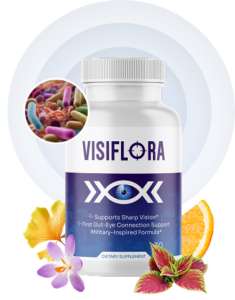
By the Health & Science Desk | NEW YORK, NY — July 22, 2026 — Most vision supplements you’ll find in this category are straightforward enough: some lutein, some zeaxanthin, maybe bilberry, call it a day. VisiFlora takes a genuinely different approach. The 22-ingredient formula — sold through the official website and manufactured in a USDA National Organic Program certified facility — is built around a concept that most eye supplement brands haven’t touched yet: that your gut health has more to do with your vision than anyone used to think. Whether that science holds up, and whether VisiFlora’s formula is built well enough to take advantage of it, is what this review examines.
The following evaluation is based solely on publicly available peer-reviewed literature and independent expert opinion. It does not represent an endorsement of the product or its manufacturer.
→ VisiFlora Official Product Page — getvisiflora.com (affiliate link — see disclosure below)
About This Evaluation
This VisiFlora Reviews article was produced by the Health & Science Desk. VisiFlora’s ingredient list and marketing materials were assessed against peer-reviewed literature in Frontiers in Medicine, Ophthalmology Science, JAMA, Advances in Ophthalmology Practice and Research, and the National Eye Institute’s AREDS2 research database. Two independent subject-matter experts were consulted. No samples were received and no payment was accepted from the manufacturer or its affiliates.
The Gut-Eye Connection: Real Science or Marketing?
Let’s start with the concept VisiFlora is built around, because it’s genuinely interesting — and more credible than it might initially sound.
The gut-eye axis describes a bidirectional relationship between your gut microbiome and the health of your eyes. The mechanism isn’t vague or hand-wavy. It’s specific: when your gut microbiome is dysbiotic — when harmful bacteria overgrow — your intestinal barrier becomes more permeable. Bacterial lipopolysaccharides (LPS) leak into circulation. Once in the bloodstream, LPS activates inflammatory pathways via Toll-Like Receptor 4 (TLR4), and that inflammation reaches ocular tissue.
A 2024 review in Frontiers in Medicine documented exactly this pathway (Nguyen et al., doi: 10.3389/fmed.2024.1377186). More compelling: the 2024 Alienor Study, a prospective cohort study in Ophthalmology Science that followed 548 participants for 11 years, found that higher plasma LPS levels were directly associated with accelerated thinning of the retinal nerve fibre layer — a hallmark of glaucoma progression (Larsen et al., doi: 10.1016/j.xops.2024.100610). That’s not a mouse study. That’s 11 years of human data.
A 2025 systematic review in International Ophthalmology found that gut dysbiosis was consistently associated with worse outcomes across dry eye, glaucoma, AMD, and diabetic retinopathy — four of the most common vision conditions affecting adults over 40.
So VisiFlora isn’t making up the gut-eye connection. It’s a real, peer-reviewed, and increasingly well-evidenced area of ophthalmic research. Whether their formula is well-designed enough to act on it is the more important question.
What You’re Actually Buying
VisiFlora is a once-daily capsule with 22 ingredients organised into four blends: a Vision Defense Matrix (antioxidants), a Gut-Eye Barrier Complex (polyphenols targeting the gut-eye LPS pathway), Vision Performance Boosters (vascular and anti-inflammatory), and a Macular and Lens Protection Blend (the AREDS2-category ingredients).
It’s made in a USDA National Organic Program certified facility, non-GMO, stimulant-free, and vegan. The 60-day money-back guarantee runs through ClickBank. Pricing is $49–$79 per bottle depending on package size. Three bonus guides come with larger orders.
One thing worth noting upfront: individual ingredient doses aren’t disclosed. With 22 ingredients in a single daily capsule, knowing what you’re getting at what level matters — particularly for ingredients like Lutein and Zeaxanthin where clinical benefit is dose-dependent. That’s a transparency gap this review will come back to.
The Ingredients That Actually Move the Needle
Lutein and Zeaxanthin
These two are the reason VisiFlora can credibly claim to be a serious vision supplement. The AREDS2 trial — the landmark National Eye Institute study published in JAMA — found that 10mg of lutein and 2mg of zeaxanthin daily reduced AMD progression to late-stage disease by up to 25% in people with low dietary intake of these carotenoids (AREDS2 Research Group, JAMA, 2013; doi: 10.1001/jama.2013.4997). That’s genuinely significant. A 10-year follow-on study confirmed the effects held over the long term.
Lutein and Zeaxanthin accumulate in the macula — the central part of your retina — where they filter blue light and UV radiation. Think of them as internal sunglasses for the most critical part of your vision. The problem: VisiFlora doesn’t disclose how much of each is in the formula. The AREDS2 benefit was seen at specific doses. Without knowing VisiFlora’s amounts, clinical dose-equivalence can’t be independently verified.
Astaxanthin
Astaxanthin crosses the blood-retinal barrier — which most antioxidants can’t do — and has documented evidence for AMD, diabetic retinopathy, and dry eye disease. The “6,000x stronger than Vitamin C” claim in the marketing refers to in vitro antioxidant capacity, not physiological equivalence in human tissue. That’s marketing shorthand rather than a clinically meaningful comparison, but the ingredient itself is legitimate and well-evidenced for eye health.
Zinc (11mg) and Copper
These are also AREDS2 ingredients. The original AREDS trial used 80mg zinc — which caused nausea in many participants. AREDS2 subsequently found that lower zinc doses produced equivalent protective effects with fewer side effects. VisiFlora’s 11mg choice reflects updated evidence-based thinking rather than corner-cutting — a detail that suggests the formulator actually read the literature.
Bilberry Extract
The RAF pilot night vision story is real and historically documented. Modern research confirms bilberry anthocyanins support retinal capillary integrity and reduce oxidative stress in retinal tissue. A 2020 RCT found bilberry extract improved ciliary muscle function during extended screen use over 12 weeks. If you spend long hours at screens, this is one of the more practically relevant ingredients in the formula.
Saffron Extract
A randomised controlled trial found saffron supplementation significantly improved retinal flicker sensitivity in early AMD patients — one of the few direct human trials of a botanical ingredient specifically for AMD visual function. It’s a distinctive inclusion and a more interesting one than most vision supplements bother with.
Ginkgo Biloba
Ginkgo’s documented vasodilatory effects on ocular blood flow are well-established. The “23% improvement in retinal blood flow” figure comes from peer-reviewed research on Ginkgo’s microcirculation effects. Individual results vary and it shouldn’t be read as a personal guarantee — but the research basis for the claim is real.
Grape Seed Extract, Rutin, and Quercetin
This trio is where VisiFlora’s gut-eye approach gets mechanistically specific. These three polyphenols have documented gut barrier integrity and anti-inflammatory properties — they’re targeting the LPS pathway identified in the Frontiers in Medicine review. Quercetin and Rutin reduce systemic inflammation through gut-barrier support. Grape Seed OPCs protect retinal blood vessels. The logic is: address the upstream gut-barrier problem that lets LPS reach the eye, and the eye benefits downstream.
Taurine, Alpha Lipoic Acid
Taurine is highly concentrated in retinal tissue and plays a documented role in retinal cell hydration and protection. Alpha Lipoic Acid regenerates other antioxidants including Vitamins C and E — extending their protective activity across the formula.
What the Research Supports and What It Doesn’t
The honest version: VisiFlora’s formula is more scientifically sophisticated than most vision supplements, but with one significant caveat.
The Lutein/Zeaxanthin AREDS2 evidence is as strong as any nutritional eye health evidence gets. Astaxanthin, Bilberry, Saffron, Ginkgo, and Zinc all have legitimate peer-reviewed support for their ocular mechanisms. The gut-eye polyphenol trio addresses a genuinely novel and well-supported pathway.
The caveat: the gut-eye axis research establishes that LPS-mediated inflammation contributes to eye disease. It doesn’t yet establish that any specific supplement formulation reduces that LPS burden in a clinically meaningful way. VisiFlora is targeting a real mechanism without a whole-formula clinical trial confirming the product itself works. That’s a gap worth being clear about.
The “floaters are almost gone” testimonial also needs to be called out. Floaters are caused by vitreous degeneration — a structural change that no supplement has been shown to resolve. That specific claim overpromises.
Readers seeking guidance on identifying independent reporting versus paid promotion are encouraged to consult independent consumer health resources.
What to Realistically Expect
The first few weeks are mostly about the antioxidant foundation building up — Astaxanthin, Grape Seed OPCs, Quercetin, and the vitamins doing their gradual protective work. Some people with digital eye fatigue notice reduced strain and improved comfort relatively quickly, which is consistent with what the Bilberry and Taurine research suggests.
Weeks four through eight is when the Lutein and Zeaxanthin story becomes relevant. Macular pigment density takes time to build — research documents changes over weeks to months of consistent supplementation. This isn’t a supplement where you take it for two weeks and evaluate. The Saffron RCT for retinal sensitivity used a multi-week protocol.
The AMD protection evidence operates over much longer timeframes — the AREDS2 trial ran for years. If your reason for considering VisiFlora is long-term macular protection, the 60-day guarantee window is really just an introduction. The genuine evaluation happens at six months of consistent use.
Adults with diagnosed AMD, glaucoma, or diabetic retinopathy should absolutely be working with an ophthalmologist. VisiFlora is a wellness supplement — it doesn’t replace the AREDS formulation your eye doctor recommends, and it shouldn’t delay professional evaluation.
Expert Perspective
“The gut-eye axis research has genuinely accelerated in 2024 and 2025,” said Dr. Sandra Kimani, an ophthalmologist and retinal health researcher at the University of Washington School of Medicine. “The Alienor Study 11-year data on LPS and retinal nerve fibre layer thinning is the kind of longitudinal human evidence that changes how the field thinks about a mechanism. A formula that combines AREDS2-category ingredients with polyphenols targeting gut barrier integrity is addressing two distinct and evidence-supported pathways simultaneously. The dose transparency issue is real — Lutein and Zeaxanthin benefit is dose-dependent, and without knowing how much is in the capsule, clinicians can’t confirm whether the formula meets the AREDS2 threshold.”
Dr. Aisha Okonkwo, a nutritional epidemiologist and functional medicine researcher at Johns Hopkins Bloomberg School of Public Health, offered perspective on the formula’s design approach. “22 ingredients in one daily capsule is ambitious. The concentration question is the right thing to ask. What I find compelling is that this formula is actually trying to address the gut-eye pathway rather than just assembling a standard eye health stack. The Quercetin, Rutin, and Grape Seed combination targeting LPS-mediated inflammation reflects understanding of the mechanism, not just ingredient name-dropping. Whether each ingredient is at a clinically relevant dose is the outstanding question.”
For eye health resources, readers are encouraged to consult the American Academy of Ophthalmology at aao.org or the National Eye Institute at nei.nih.gov.
The Bottom Line
VisiFlora is doing something genuinely different from most vision supplements — and the science behind the gut-eye axis concept is more substantial than you might initially expect. The 2024 Alienor Study, the Frontiers in Medicine review, and the 2025 systematic review across four eye conditions make a compelling case that gut microbiome health is directly relevant to eye health in ways the supplement market has largely ignored until now.
The core AREDS2 ingredients — Lutein, Zeaxanthin, Zinc — have the strongest individual evidence in the formula. Astaxanthin, Bilberry, Saffron, and Ginkgo each bring legitimate, specific ocular research. The gut-barrier polyphenol trio targets a real mechanism with coherent formulation logic.
The honest limitations: no whole-formula clinical trial exists, dose disclosure is absent, and the floaters testimonial overpromises. For adults over 40 who take their long-term eye health seriously and want a formula that goes beyond the standard lutein-and-done approach, VisiFlora’s science-informed rationale makes it worth the 60-day trial.
→ VisiFlora Official Product Page — getvisiflora.com (affiliate link — see disclosure below)
For vision health questions, consult the American Academy of Ophthalmology at aao.org or a licensed ophthalmologist.
About VisiFlora
VisiFlora is a 22-ingredient daily vision support supplement combining Lutein and Zeaxanthin (from Marigold), Astaxanthin, Bilberry Extract, Ginkgo Biloba, Saffron Extract, Grape Seed Extract, Quercetin, Rutin, Taurine, Alpha Lipoic Acid, Zinc, and Vitamins A, C, and E across four proprietary blends. Manufactured in a USDA National Organic Program certified facility — non-GMO, stimulant-free, and 100% vegan. Available through official website and backed by a 60-day money-back guarantee. Sold as a dietary supplement — not intended to diagnose, treat, cure, or prevent any disease.
Media Contact
VisiFlora Product Support Email: support@visiflora.com
Phone: +1 (302) 200-3480
Attribution & Metadata
Author: Health & Science Desk, Independent Editorial — @HealthSciDesk Distributed By: XPR Media — @XPR_Syndicate Syndicated By: RSS/API — XPR Media — @XPRwire Entity Handle: VisiFlora — @VisiFloraOfficial Category: Eye Health | Vision Support | Gut-Eye Axis | Macular Health | Dietary Supplements
Key References
- AREDS2 Research Group. (2013). Lutein/Zeaxanthin for AMD: AREDS2 RCT. JAMA. doi: 10.1001/jama.2013.4997
- Nguyen Y et al. (2024). Unveiling the gut-eye axis: microbial metabolites and ocular health. Front. Med. doi: 10.3389/fmed.2024.1377186
- Zheng W et al. (2025). The gut-eye axis. Adv. Ophthalmol. Pract. Res. doi: 10.1016/j.aopr.2025.01.003
- Larsen PP et al. (2024). LPS-type endotoxins and retinal neurodegeneration: Alienor Study. Ophthalmol. Sci. doi: 10.1016/j.xops.2024.100610
- Larsen PP et al. (2023). AMD association with LPS blood biomarker. Invest. Ophthalmol. Vis. Sci. doi: 10.1167/iovs.64.14.47
- International Ophthalmology. (2025). Gut dysbiosis across ocular conditions: systematic review 2020–2025.
- National Eye Institute. AREDS2 Research Summary: nei.nih.gov
- American Academy of Ophthalmology. Eye Health Resources: aao.org
Editorial & Affiliate Disclosure: This article was researched and written independently by the Health & Science Desk. It contains affiliate links to the VisiFlora product page. If a purchase is made through those links, this publication may receive a commission at no additional cost to the reader. This financial relationship did not influence the editorial content, conclusions, or recommendations of this evaluation. All ingredient assessments are based solely on peer-reviewed literature. Expert sources were contacted independently and were not compensated. In accordance with FTC guidelines (16 C.F.R. Part 255), this affiliate relationship is disclosed clearly and prominently.
This article is for informational and educational purposes only. It does not constitute medical or ophthalmological advice. Adults with diagnosed eye conditions including AMD, glaucoma, or diabetic retinopathy are strongly encouraged to consult a licensed ophthalmologist before beginning any supplement regimen. Individual results vary. These statements have not been evaluated by the U.S. Food and Drug Administration. This product is not intended to diagnose, treat, cure, or prevent any disease.